America at 250: Stoic Virtue and the Future of the American Experiment
A one-day conference exploring how Stoic philosophy, constitutional design, and civic judgment can help illuminate the challenges of democratic self-government in the digital age.
Saturday, October 24, 2026 · Historical Society of Pennsylvania · Philadelphia, PA
As the United States marks its 250th anniversary, this conference asks what kinds of judgment, discipline, and self-government are necessary for constitutional democracy to endure. The American constitutional system was designed with a realistic understanding of human behavior, seeking to slow decision-making, distribute power, and preserve deliberation.
Today, algorithm-driven media, accelerated public discourse, and information environments optimized for engagement rather than truth place new pressure on those democratic assumptions. America at 250 brings together scholars and public thinkers in philosophy, law, history, and technology ethics to explore how Stoic virtue and constitutional design can help us think more clearly about citizenship and governance in the digital age.
Featured Speakers
Invited speakers include leading scholars in philosophy, law, and public life.
Dr. Sophia Rosenfeld
Walter H. Annenberg Professor of History, University of Pennsylvania
Dr. Rosenfeld is a historian specializing in European and American intellectual history and the Age of Revolutions, with a focus on the history of democracy and democratic thought.
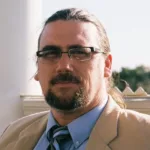
Dr. Gregory Sadler
President, ReasonIO; Marquette University
Dr. Sadler is a leading figure in contemporary Stoic philosophy and education, known for making ancient wisdom accessible to modern audiences through ReasonIO and his work at Marquette University.
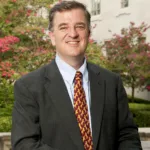
Kermit Roosevelt III, J.D.
David Berger Professor for the Administration of Justice, University of Pennsylvania Carey Law School
Roosevelt is a constitutional law scholar whose work examines how legal principles adapt to changing social and technological contexts while maintaining constitutional fidelity.
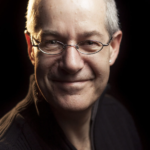
Dr. Massimo Pigliucci, Ph.D., Ph.D.
K.D. Irani Professor of Philosophy, The City College of New York (Ph.D. Genetics, Ph.D. Philosophy)
Professor Pigliucci is a prominent leader in the modern Stoic movement, bridging evolutionary biology and philosophy of science to translate ancient principles into practical guidance for contemporary life.
Delegate Cliff Hayes
Chair, Communications, Technology, and Innovation Subcommittee; Chair, General Government and Capital Outlay Subcommittee; Chair, Joint Commission on Technology and Science, Virginia General Assembly
Delegate Hayes is a Virginia legislator chairing key committees on technology, innovation, and government operations.
Ward Farnsworth
Professor of Law, University of Texas
Ward Farnsworth is an American legal scholar. who has written on a wide range of subjects, including constitutional law and legal applications of cognitive psychology. He is the author of “The Practicing Stoic.”
Event Details
Saturday, October 24, 2026
9:00 AM - 3:00 PM EDT
Registration opens at 8:00 AM
Historical Society of Pennsylvania
Approximately 100 participants
Who Should Attend
The conference is designed for a broad but serious audience, including scholars, students, practitioners, and members of the public interested in philosophy, law, citizenship, and the future of democratic life.
Constitutional scholars and legal historians
Philosophers specializing in Stoicism and ethics
Technology ethicists and digital governance experts
Educators and students in philosophy, law, and political science
Members of the wider Stoic community
Interested members of the public
Founded in 1824, the Historical Society of Pennsylvania offers an especially fitting setting for a conversation about the American experiment. Located in the heart of Philadelphia, it provides a distinguished venue for serious reflection on constitutional democracy, civic life, and historical memory.
Schedule Overview
The schedule is subject to slight changes, but the day will include morning and afternoon sessions, a lunch break, and a closing keynote.
9:00–9:45 AM
9:45–10:30 AM
10:30–11:15 AM
11:15 AM–12:00 PM
12:00–1:30 PM
1:30–2:15 PM
2:30–3:15 PM
3:15–3:30 PM
Historian of Democratic Thought
Philosopher of Ethics and Stoicism
Constitutional Law Scholar
Philosopher of Ethics and Stoicism
Lunch Break
Technology, Innovation, and Legislative Leadership
Closing Keynote
Closing Remarks
9:00–9:45 AM — Historian of Democratic Thought 9:45–10:30 AM — Philosopher of Ethics and Stoicism 10:30–11:15 AM — Constitutional Law Scholar 11:15 AM–12:00 PM — Philosopher of Ethics and Stoicism 12:00–1:30 PM — Lunch Break 1:30–2:15 PM — Technology, Innovation, and Legislative Leadership 2:30–3:15 PM — Closing Keynote 3:15–3:30 PM — Closing Remarks
Registration
Attendance is free and open to the public, but seating is limited in order to preserve an intimate and substantive atmosphere for discussion. Advance registration will be available through Luma beginning in summer 2026.
Coffee and refreshments will be provided throughout the day. Participants will have time to explore nearby lunch options during the midday break.
Philadelphia Stoa is rebuilding community through ancient Stoic philosophy adapted for modern challenges. It aims to bring people together around the practical pursuit of wisdom, virtue, and rational reflection in a distracted and divided age.
This conference reflects Philadelphia Stoa’s commitment to serious intellectual engagement, public-facing education, and meaningful community partnerships. By connecting Stoic philosophy with constitutional history, cognitive science, and information ethics, the event invites participants into a thoughtful conversation about the future of democratic self-government.